Mosaic Table Care and Cleaning: Glass and Natural Stone
A mosaic table that is looked after properly keeps its shine for years. Most of the time, all it needs is a damp cloth and a few simple habits. Here is how we clean glass and natural stone mosaic tables day to day, how to deal with spills, and why it is worth bringing a balcony table indoors as the weather turns cold.
Why does a mosaic table need care?
A mosaic top is made of two materials: the pieces themselves (tesserae) and the grout that fills the gaps between them. Glass pieces do not absorb water or stains, but grout is porous and can soak up coffee, oil or wine. Natural stone is porous too, and it reacts with acids. So most of the care is really about protecting the grout and the stone, not the surface. If you are still deciding on materials, our post on glass mosaic or natural stone covers the differences.
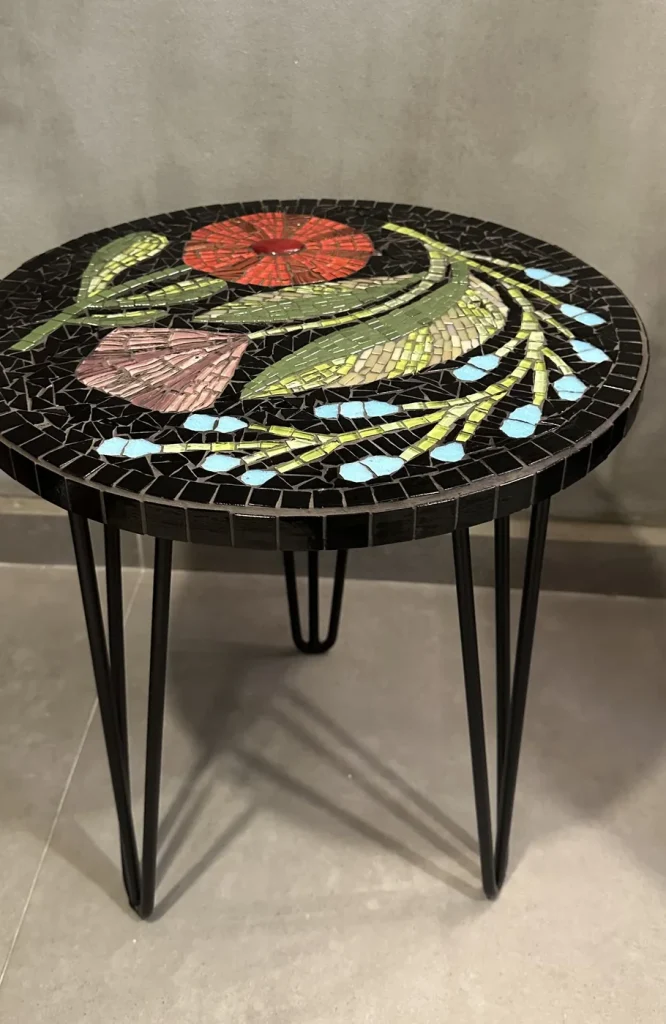

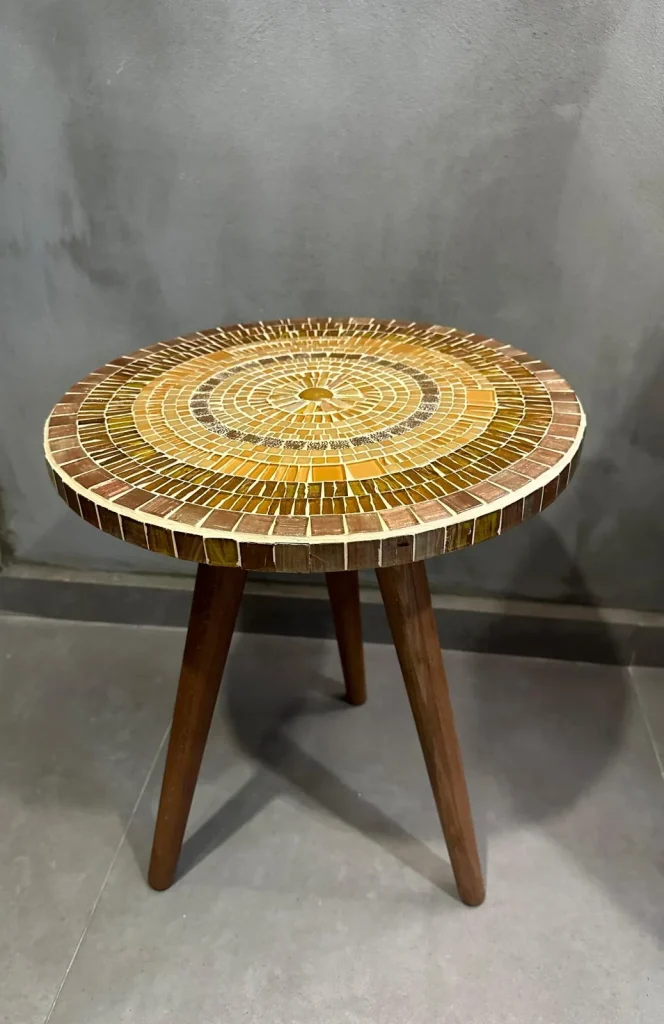
Everyday cleaning in three steps
- Dust first: wipe the top with a dry, soft microfibre cloth. Avoid stiff brushes and scouring pads, which can scratch the glass.
- Wipe with a damp cloth: use a cloth lightly dampened with warm water. If needed, add a few drops of a mild, pH neutral liquid soap.
- Dry straight away: go over the top with a dry cloth. Not letting water sit in the grout or along the edges is the habit that matters most in the long run.
Never wash the table by pouring water over it. The mosaic itself copes with water, but the board underneath and the joints with the base should not stay wet for long.
Cleaning products to avoid
Harsh chemicals are the biggest enemy of a mosaic table. These can wear away grout, bleach its colour or dull the surface of natural stone:
- Acidic products such as vinegar, lemon juice and limescale removers (especially on marble, travertine and other natural stone)
- Bleach and chlorine based cleaners
- Abrasive creams and powders
- Ammonia based glass sprays, which can leave marks on grout
If you are unsure about a product, test it on a small, hidden corner of the top first.
Spills, stains and grout care
When something spills
Blot coffee, tea, wine or oil with kitchen paper right away rather than wiping it around, then clean with a damp cloth and dry. Lifting a spill before it soaks into the grout is far easier than dealing with a stain later. Coasters and a small tray for everyday use are the simplest way to protect the grout.
Stubborn dirt in the grout
Dirt that has settled into the grout can usually be lifted with a soft toothbrush and soapy water made with a pH neutral soap, brushed gently. If the grout colour has changed for good, or you notice cracks or gaps, get in touch before trying to fix it yourself. Repairing or replacing grout is a job for the studio.
Protective sealer
Grout and natural stone can be treated with a protective sealer that makes them less likely to take on water and stains. How often it needs renewing depends on the material and how heavily the table is used. A quick test: put a few drops of water on the grout. If they bead up, the protection is still working. If they soak in quickly, it may be time to reseal.

Changing seasons: bring the balcony table inside
As autumn sets in, we recommend bringing a mosaic table used on a balcony or terrace indoors. Water that gets into the grout expands when it freezes, and over time that can loosen pieces or crack the grout. A table that spends the winter somewhere dry and sheltered will look just as good when it goes back out in spring. Indoors, keep it away from radiators and stoves, and out of long hours of direct sunlight.
Bases and edges
Wipe metal bases with a dry cloth and dry them straight away if they get wet. For wooden bases a damp cloth followed by a dry one is enough. The edge of the top takes the most knocks, so when you move the table, lift it from underneath and by the base rather than by the edge, and do not drag it. You can see how the top and base come together on our how mosaic tables are made page.
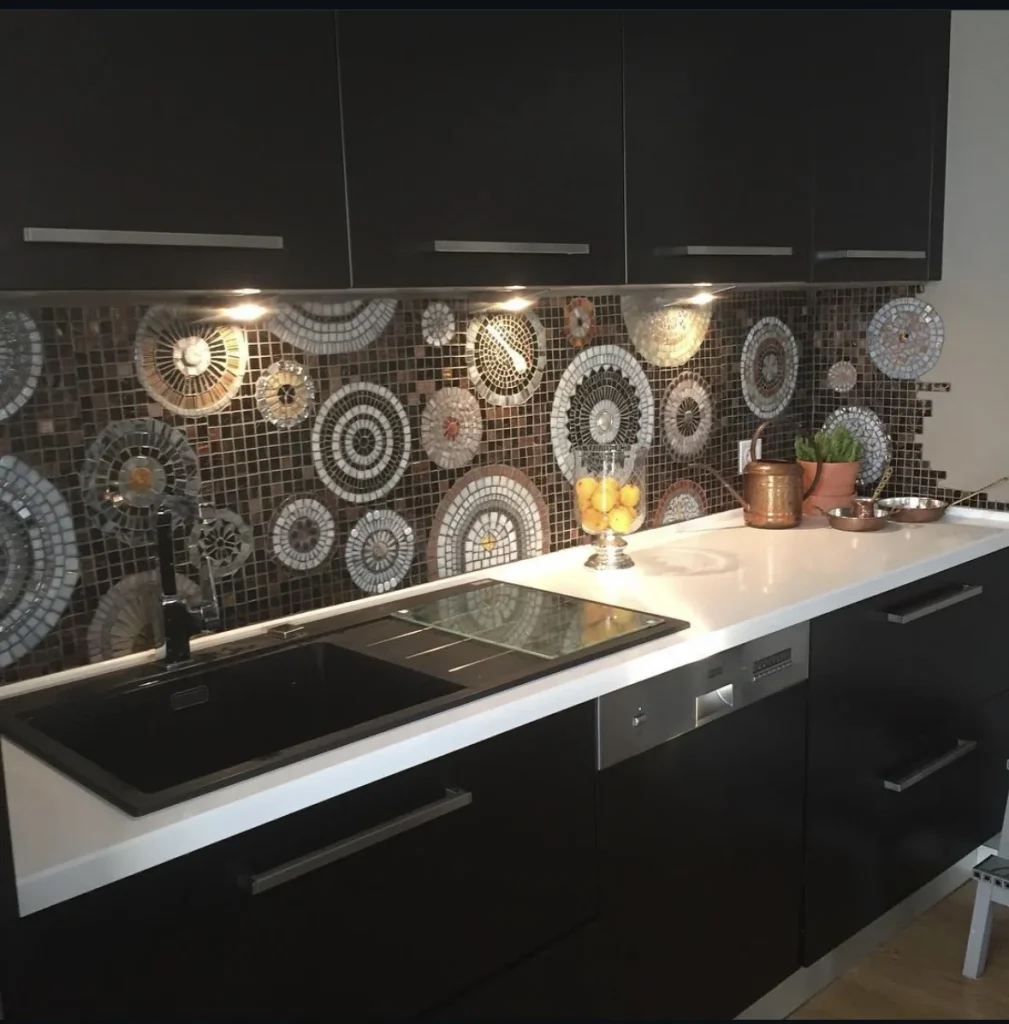
The same rules apply to site specific mosaic work such as kitchen splashbacks and wall pieces: a pH neutral cleaner, a damp cloth, then dry. You can see more of our work on the mosaic tables page.
Frequently asked questions
Dust it with a dry microfibre cloth, wipe it with a cloth lightly dampened with warm water, then dry it straight away. A few drops of pH neutral liquid soap can be added to the water if needed.
We do not recommend it. Acidic products such as vinegar and lemon can damage natural stone and grout, and bleach can lighten the grout colour. Use a mild, non abrasive, pH neutral cleaner instead.
It can be used on a sheltered balcony or terrace in the warmer months, but it should come indoors before frost. Water in the grout expands as it freezes and can loosen the pieces.
Let’s design your table together
Size, colours and pattern are chosen with you, and your table is made as a single piece in our Istanbul studio. Send a photo of your space and the size you have in mind.