
History of Mosaic
The history of mosaic reaches back to antiquity. The idea of decorating a surface with small pieces developed across many cultures over thousands of years and has made its way to the tables in our homes.
Early examples: Mesopotamia
The earliest known mosaic-like decoration appears in Mesopotamia. Cone-shaped pieces of fired clay (terracotta) were pressed into walls, their red, black and white ends forming zigzags, diamonds and other geometric patterns.
Ancient Greece and Rome
Pebble floors in ancient Greece gradually gave way to detailed figurative mosaics made of cut stone. In the Roman period mosaic became a widespread decoration for the floors of villas, baths and public buildings.
Byzantium: the golden age
Although mosaic appears in many periods and cultures, its golden age is generally placed in Byzantium between roughly the 4th and 14th centuries. Wall and dome mosaics made with glass and gold-leaf tesserae became the main pictorial art of the time.
Mosaic in Islamic art
Islamic art is known for the mathematical richness it brought to mosaic patterns. Glass and stone cubes were sometimes used, but Islamic works more often used tiles made for the design, their edges ground by hand to fit together without gaps. Geometric patterns such as the eight-pointed star, which we use on our tables, come from this tradition.
The Zeugma mosaics
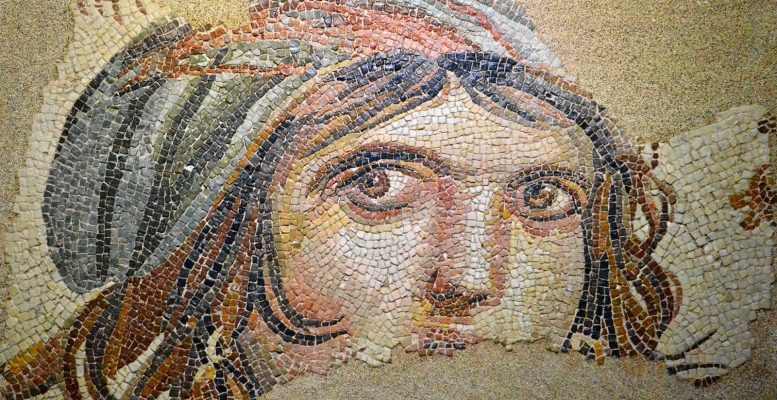
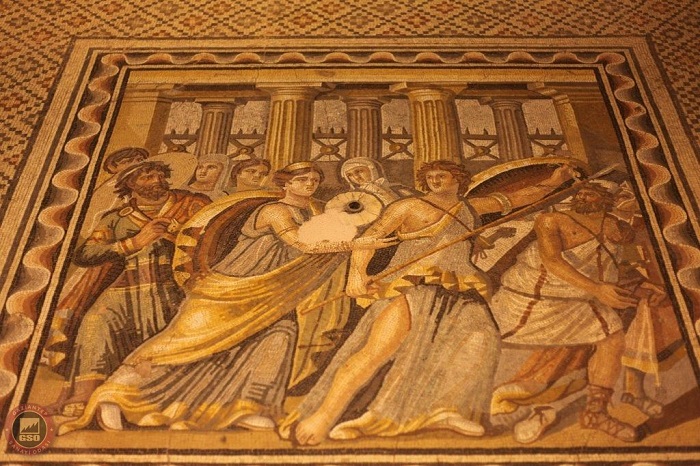
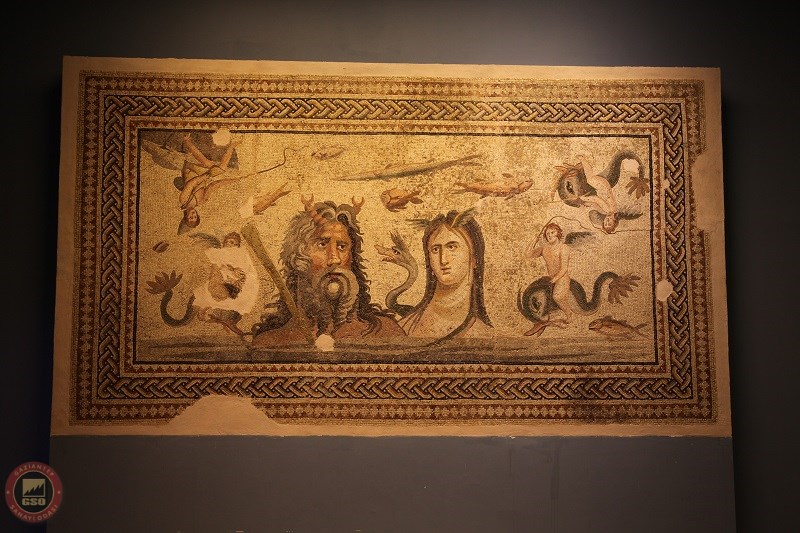
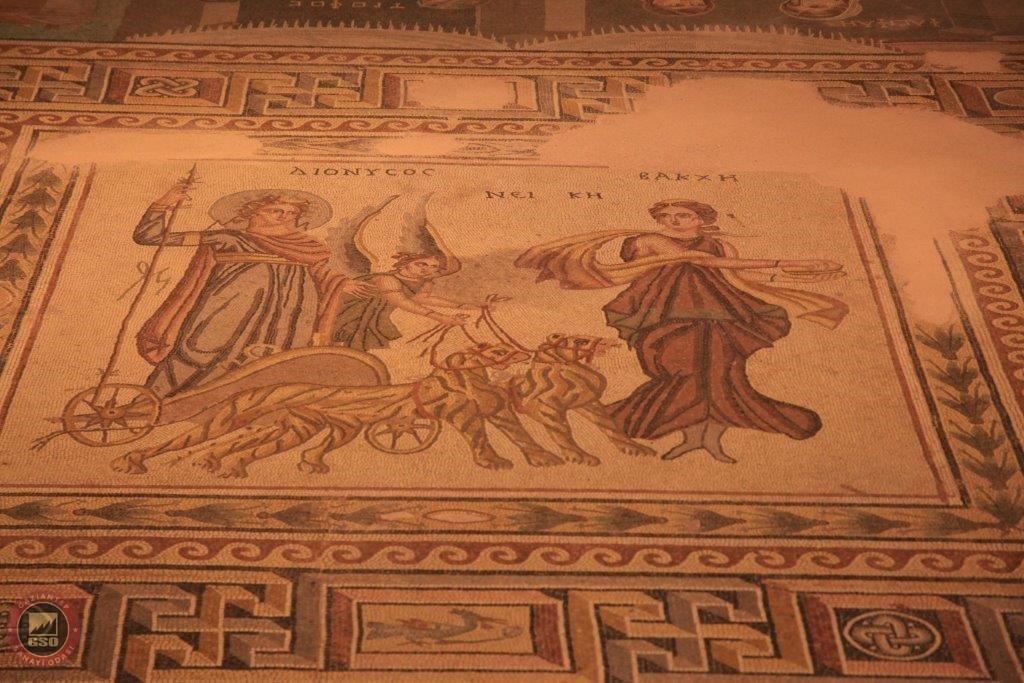
The mosaics excavated at the ancient city of Zeugma near Gaziantep form one of the most important mosaic collections in the world and are exhibited at the Zeugma Mosaic Museum in Gaziantep. Its best-known work is the Gypsy Girl mosaic, which has become a symbol of the city. The figure is thought to depict Gaia, the earth goddess of Greek mythology.
Mosaic today
Today mosaic is used in furniture and interiors as well as architecture. We try to keep this tradition alive in our handmade mosaic tables. To learn how mosaic is made, see our guide how to make mosaic.
Frequently asked questions
The first mosaic-like decorations were made in Mesopotamia, using fired clay cones with coloured ends pressed into walls.
Mosaic reached its golden age in Byzantium between roughly the 4th and 14th centuries.
The Gypsy Girl mosaic from Zeugma is displayed at the Zeugma Mosaic Museum in Gaziantep, Türkiye.
Bring this tradition home
Size, colours and pattern are chosen with you, and your table is made as a single piece in our Istanbul studio. Send a photo of your space and the size you have in mind.